Details still missing
Capture cargo, packages and open points in one brief. Keep unknown dimensions explicitly marked as unknown.
Enquiring about transport with incomplete data ↗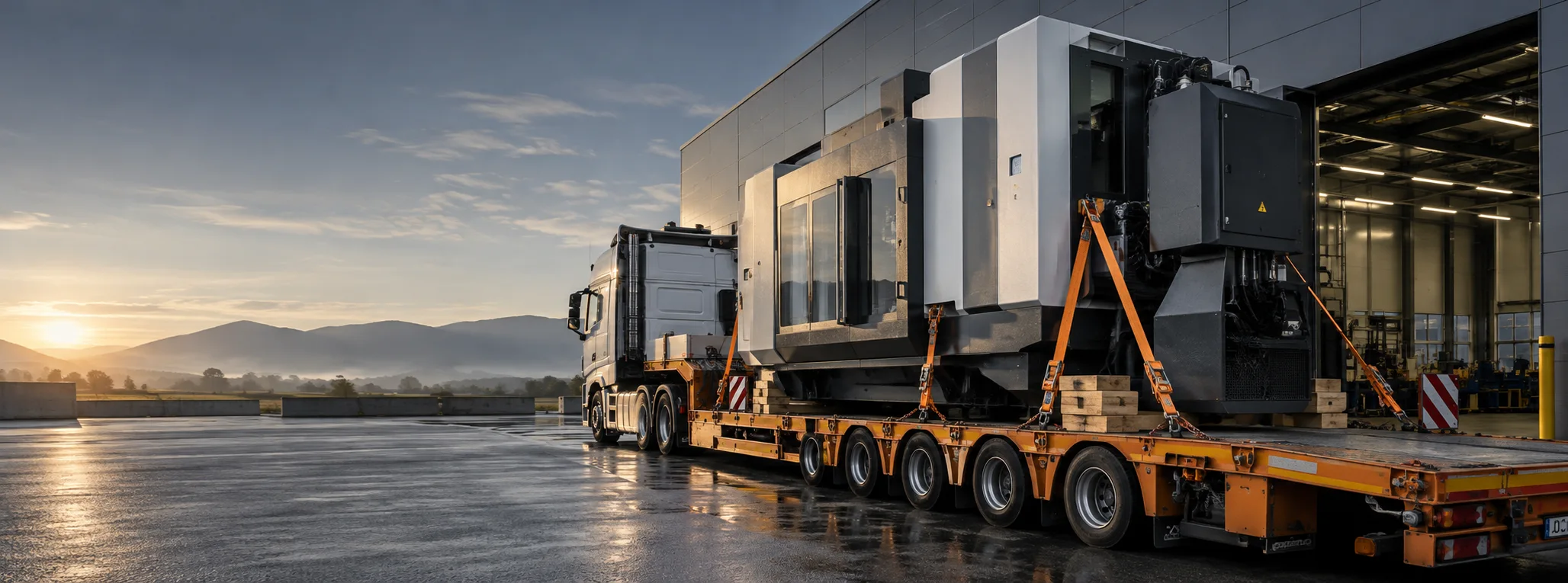
Machinery transport
Choose the next unresolved decision. This guide moves from an initial brief through comparable quotations to confirmed handovers and destination details.
Capture cargo, packages and open points in one brief. Keep unknown dimensions explicitly marked as unknown.
Enquiring about transport with incomplete data ↗Give both providers the same quantities, timing and scope. Mark differences before comparing prices.
Comparing machinery transport quotations ↗Assign preparation, receipt and time-window confirmation to specific people.
Coordinating unloading at the machinery destination ↗Choose the actual collection and receiving locations. Define whether the job ends at a terminal or at the final address.
Countries & routes ↗Use the same enquiry basis for both quotations in each row. “Open” does not mean included. Select and copy the fields into your own document.
| Comparison point | Common enquiry basis | Quotation A | Quotation B |
|---|---|---|---|
| Outbound, return and onward legs with final addresses | Enter / confirm | Enter / confirm | Enter / confirm |
| Packages, packed dimensions and weight per direction | Enter / confirm | Enter / confirm | Enter / confirm |
| Readiness, receiving windows and deadlines | Enter / confirm | Enter / confirm | Enter / confirm |
| Handover point and movement within the site | Enter / confirm | Enter / confirm | Enter / confirm |
| Packaging, loading and unloading: who does what? | Enter / confirm | Enter / confirm | Enter / confirm |
| Waiting-time terms and additional tasks | Enter / confirm | Enter / confirm | Enter / confirm |
| Open assumptions, exclusions and approvals | Enter / confirm | Enter / confirm | Enter / confirm |
| Total price, currency and validity | Enter / confirm | Enter / confirm | Enter / confirm |
Transport dimensions describe the outer envelope in the intended collection condition.
Machine weight should match the actual unit and equipment being released.
Missing information does not have to prevent an initial machinery transport enquiry.
A data sheet is useful when it matches the actual machine variant.
Useful photographs show the machine, projecting parts and the collection surroundings.
A complete machine purchase may include several small transport items. An accessory list keeps them visible alongside the main machine.
Open, mounted on a base or enclosed in a crate: the actual packaging condition belongs in the enquiry before collection.
Describe asymmetric machinery with more than its total weight. Available manufacturer information on weight distribution adds useful context to the enquiry.
A date and a confirmed receiving window are different pieces of information. Both sites should state when they can actually handle the handover.
A new destination changes more than the route. Receiving conditions, contacts and agreed handover points also need another review.
Clarify any operating fluids with the machine operator and the party releasing it. Include any open questions about tanks or remaining contents in your transport enquiry.
A requested collection date does not establish confirmed readiness. What matters is when the agreed transport items can actually be handed over.
Clarify who performs each task at collection before the transport. An available machine is not automatically prepared for loading.
Delivery involves more than an address: responsibilities at the agreed handover point must match the intended arrival window.
The buyer, seller and collection contact may be different people. Clear release instructions prevent conflicting expectations at the handover point.
A condition overview shows how the machine is actually handed over. It should refer to concrete observations and identifiable transport items.
Purchasing, technical staff and gate personnel answer different questions. A short role overview is more useful than unlabelled phone numbers.
When several machines are released, the preferred order is a separate planning input. It should not be inferred from a numbered purchase list.
An item list helps reconcile what arrives. Machines, accessory boxes and separate assemblies should use the same identifiers as at collection.
Machinery transport costs depend on the prepared unit, route, dates and tasks at collection and delivery. We review these details together; the machine’s purchase price does not describe the transport work involved.
Two transport quotations are meaningfully comparable only when they describe the same items and handover conditions. The final amount alone does not reveal those differences.
Waiting does not occur only at a closed gate. Missing release, unfinished preparation or an unavailable contact can also delay the handover.
An additional accessory box or a different machine weight can change an existing enquiry. Clearly connect changes to the previous information version.
An early budget enquiry can support a purchase or relocation project. Keep it clearly separate from a transport enquiry based on fully confirmed information.
Good to know
When both cover the same goods, directions, dates and handover points, with responsibilities and open assumptions described consistently. Mark differences in packaging, handling, waiting-time terms and validity before comparing prices.
Request transport
Describe your cargo, route and preferred dates. Together we turn these details into the basis for an individual quotation.
Your details and files are transmitted in encrypted form via Cloudflare to the Zammad ticket system of HSNK s.r.o. and stored there as an enquiry.
Your entries remain when moving between steps. They are not saved when the page is reloaded.